
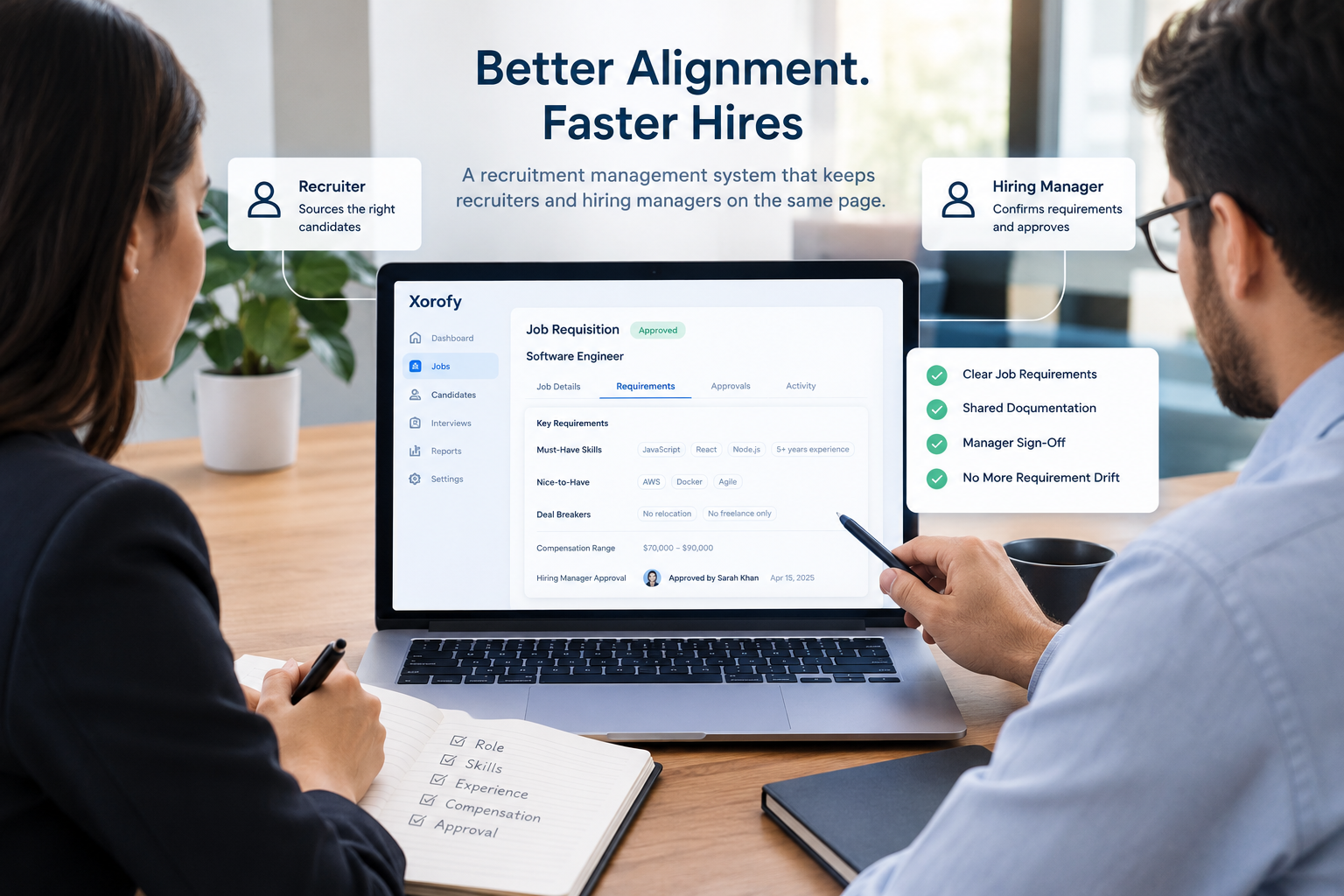
A recruitment management system aligns recruiters and hiring managers by locking job requirements before sourcing starts. It captures role scope, must-have skills, and manager sign-off in one shared record at intake. Instead of scattered emails and verbal assumptions, both sides work from the same documented brief. This stops mid-search requirement drift, the most common reason sourcing gets restarted after weeks of work.
A recruiter spends two weeks sourcing candidates who match a role’s original brief. Then the hiring manager sees the shortlist and says, “Actually, we need someone more senior.” Nothing was written down differently. The manager’s expectations simply shifted once real resumes appeared. This is one of the most common, most avoidable hiring breakdowns, and it happens because requirements were never locked in.
A recruitment management system solves this by making intake a real step, not a formality. Instead of a quick call and a vague job description, the recruiter and hiring manager build a shared, documented brief before contacting a single candidate. That record becomes the reference point for the entire search, so alignment doesn’t depend on memory or goodwill.
Why Job Requirements Quietly Change Three Weeks Into the Search
Requirements shift mid-search because they were never fully defined at the start. Hiring managers often describe a role in broad strokes, like “strong communicator” or “five-plus years of experience,” without agreeing on what actually disqualifies a candidate. Recruiters then source against their best interpretation of that brief.
The gap surfaces only when real resumes hit the manager’s inbox. Faced with actual people instead of an abstract description, managers start reacting to specifics they never mentioned before: a certification they assumed was required, an industry background they now say matters. From the recruiter’s side, this looks like the goalposts moving. From the manager’s side, it feels like finally seeing what they meant all along.
Either way, the cost lands on the search. Sourcing restarts, candidates already in the pipeline get passed over unfairly, and trust between recruiter and manager takes a hit before the role is even close to filled.
How a Recruitment Management System Locks Requirements at Intake
An intake conversation only prevents drift if its output is specific and recorded somewhere both people can see it later. A recruitment management system gives that conversation structure and a permanent home once it’s done.
Instead of a job description sitting in a shared drive, the requisition includes fields for must-have skills, deal-breakers, compensation range, and approval status. When a hiring manager wants to add a new requirement mid-search, they’re editing a visible record instead of sending a side email the recruiter has to interpret and remember.
This matters because verbal agreements fade fast, especially for hiring managers juggling dozens of other priorities. A locked, visible requisition removes the ambiguity that lets requirements quietly reshape themselves three weeks in.
What Alignment Looks Like in Practice
Strong intake alignment isn’t complicated, but it requires discipline before you contact the first candidate. Teams that get this right tend to follow a similar pattern.
- Hold one structured intake meeting, not a five-minute hallway chat, and document the outcome immediately.
- Rank requirements by priority: must-have, nice-to-have, and disqualifying, so both sides agree on what “qualified” actually means.
- Get written sign-off from the hiring manager before sourcing begins, even if it’s a quick confirmation on the requisition itself.
- Set a change-control rule: new requirements added after sourcing starts require a documented reason, not a passing comment.
Recruiting teams that follow this pattern report far fewer restarted searches. The upfront time cost is small compared to the weeks lost re-sourcing against requirements that shifted without warning.
How Teams Keep This Structure in Place at Scale
Most teams already know intake alignment matters. The harder part is making it stick once hiring picks up speed and requisitions start piling up. Tools built for this, such as Xorofy, keep locked requirements visible to everyone involved instead of living in a forgotten email thread.
Structured applicant tracking systems make this easier to enforce. Every requisition carries fields for priority requirements, approval status, and sign-off history, so if a hiring manager wants to change scope mid-search, that edit shows up on the shared record rather than arriving as a surprise during candidate review.
This is a natural extension of the broader recruitment process in HRM, where intake is treated as a tracked, accountable step rather than a casual conversation. Teams already using structured interview scorecards to standardize feedback tend to see the same value in standardizing intake, since both remove guesswork from a process that used to run on memory.
Lock the Brief Once and Hire With Confidence
Requirement drift isn’t a communication failure. It’s a documentation failure. Hiring managers and recruiters rarely disagree on purpose; they simply never captured a shared, specific brief before sourcing began. A recruitment management system closes that gap by turning intake into a recorded, visible step instead of a one-time conversation everyone half-remembers.
Teams that lock requirements early spend less time re-sourcing and more time interviewing candidates who actually fit. Pairing this discipline with applicant tracking built for accountability, including a clear approval workflow, gives both recruiters and hiring managers a shared starting point they can trust. Platforms like Xorofy are simply built around making that starting point hold, hire after hire.