
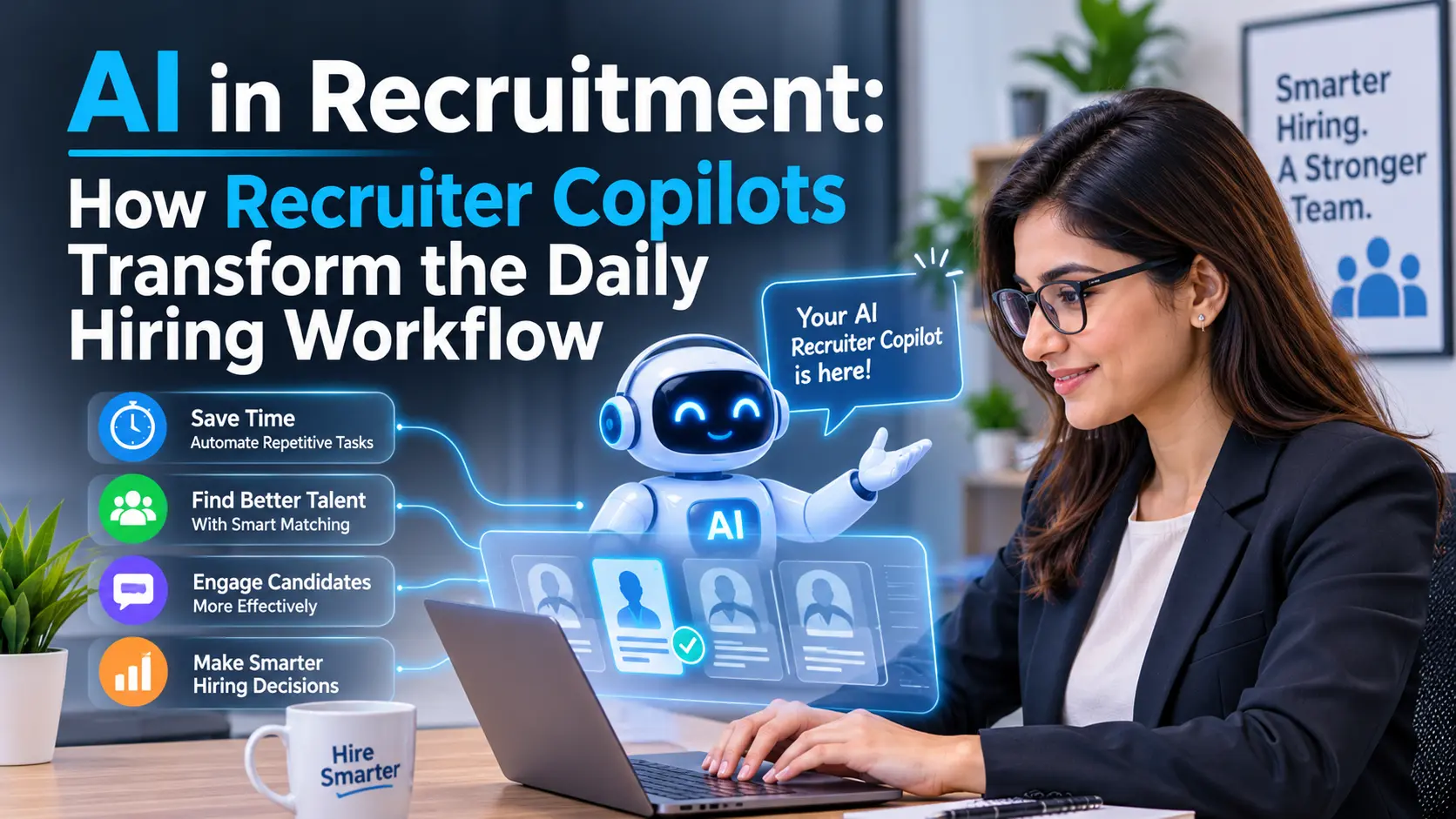
AI in recruitment helps most by automating admin work such as scheduling, status updates, and follow-up drafts. Recruiter copilots sit inside an AI-powered ATS, summarize notes, and suggest next steps. Recruiters still make every hiring decision. Teams should measure hours saved, candidate response times, and bias checks before scaling.
It is 9 a.m. Your inbox holds forty candidate emails. Three hiring managers want updates. A calendar clash needs fixing before noon. Most recruiters know this morning well. It is a big reason why AI in recruitment draws so much attention today, and why so many teams now ask about copilots.
The question is fair. Do recruiter copilots really help, or is this more hype? Here is a plain answer. Copilots will not replace your judgment. They will change how you spend your hours, and that shift matters for every recruiting leader. This guide shows what changes first, what stays human, and how to measure the gain. We wrote it for recruiters, talent acquisition specialists, and the leaders who guide them.
Meet the Copilot: An Assistant, Not a Replacement
A recruiter copilot is software that handles routine tasks and suggests next steps, while you make the final call. It works quietly inside the tools you already use.
Most copilots sit inside an AI-powered ATS. That means no extra tab and no new login. It drafts messages, sorts records, and reminds you what needs action. It never decides who gets hired.
The Admin Work AI in Recruitment Removes First
Admin work disappears first, not candidate selection. Scheduling, status updates, and follow-ups are the tasks copilots handle best today.
This matters because these tasks eat hours and add no insight. When they shrink, recruiters gain time for calls, coaching, and manager alignment. Teams at staffing companies feel this quickly, since they juggle many roles at once.
Tasks copilots take over:
- Interview scheduling that resolves time clashes
- Candidate status updates sent on time
- Draft follow-ups for you to review and send
- Short summaries of long notes and resumes
A Recruiter’s Day, Before and After
The biggest change is where you put your attention. You spend less time chasing updates and more time talking to people.
Before, a recruiter copies notes between systems, emails managers for feedback, and rewrites the same message ten times. After, the copilot logs notes in your applicant tracking software, nudges late interviewers, and drafts the routine replies. You review, adjust, and send. Good recruitment automation software keeps you in control at every step.
Where Human Judgment Still Leads
Copilots cannot judge culture fit, build trust, or negotiate an offer. Those tasks need a person.
Why People Still Guide AI in Recruitment
The limits are real. Published research on AI resume tools has raised concerns about screening bias. Hiring fraud has also drawn wider coverage, and AI-written resumes now blur the signal. Our guide on AI-generated resumes explains why old screening methods struggle. A second read on AI resume screening shows what machines do well and where people must step in.
Good practice is simple:
- Keep a human reviewer on every shortlist
- Test outputs for bias on a regular schedule
- Treat copilot suggestions as drafts, never as verdicts
Measuring the Gain Before You Commit
Start with a baseline, then compare. Without one, “time saved” is only a guess.
Simple checks that work:
- Log weekly hours spent on scheduling and status updates
- Compare candidate response times after 60 days
- Review flagged decisions each month for bias
- Ask recruiters whether their day feels lighter
Staffing companies should test on one high-volume role first. Xorofy supports this approach by keeping automation inside one hiring workspace, so teams see where admin work shrinks first. Managers also make faster staffing decisions because updates arrive in real time. A strong AI-powered ATS and clean applicant tracking software records make the numbers easy to trust.
Your Next Step With AI in Recruitment
Start small. Automate one admin task, measure the hours saved, and keep people on every decision. That is how AI in recruitment earns trust in day-to-day talent recruitment. Every hour returned is an hour for candidates and managers. Begin with one role, review the results, and expand only when the numbers justify it. Recruiters who work this way spend more time with candidates and less time chasing updates.
FAQs
Will AI in recruitment replace recruiters?
No. It removes routine tasks. Recruiters still own relationships, judgment, and final decisions.
What is a recruiter copilot?
It is a tool that drafts, schedules, and summarizes so that you can focus on people.
How long does it take to see results from a recruiter copilot? Most teams notice a lighter admin load within the first few weeks. Compare against your baseline over 60 days to confirm the gain.